
Why the City of London Is Older Than You Think
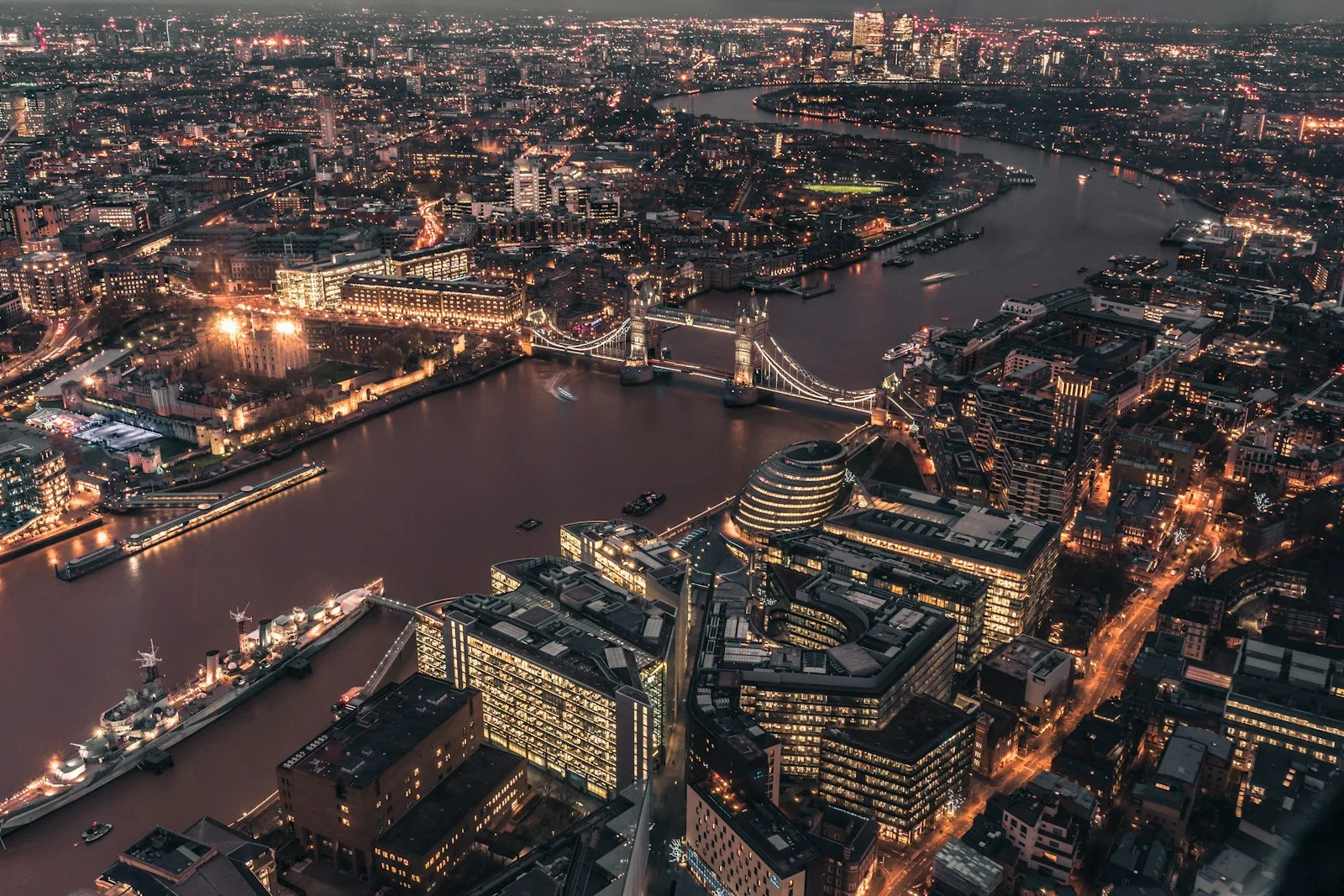
The Square Mile looks like the newest part of London — glass towers, trading floors, cranes on the skyline. It is actually the oldest. Everything else is an extension of this one square mile of riverbank, founded by Rome nearly two thousand years ago.
Londinium: the Roman beginning
Around AD 47 the Romans bridged the Thames and built a trading town on the north bank. Within decades Londinium had a forum bigger than Trafalgar Square and an amphitheatre whose remains still sit beneath Guildhall Yard — you can visit them today.
The wall you can still touch
Fragments of the Roman city wall survive at Tower Hill, Noble Street and the Barbican. The old gates are gone, but their names never left: Ludgate, Aldgate, Moorgate, Bishopsgate — every one a door in a wall that stood for over a thousand years.
A medieval city in a modern suit
The street plan under the skyscrapers is largely medieval. Cheapside was the great market ("cheap" meant market); Bread Street, Milk Street and Poultry sold exactly what their names say. After the Great Fire of 1666, Christopher Wren rebuilt the City's churches — over twenty still stand between the towers.
A city within a city
The City of London is not the same thing as London. It has its own Lord Mayor — an office older than Parliament, dating to 1189 — its own police force, and ceremonies in which even the monarch traditionally pauses at its boundary at Temple Bar.
Where to see it today
Start at the London Mithraeum beneath Bloomberg's headquarters, walk the amphitheatre outline marked in Guildhall Yard, climb to St Paul's, and finish under the Victorian ironwork of Leadenhall Market — built directly over the Roman forum.
Our Secrets of the City of London tour covers Roman, medieval and modern London on foot.