
The Hidden Stories of Westminster
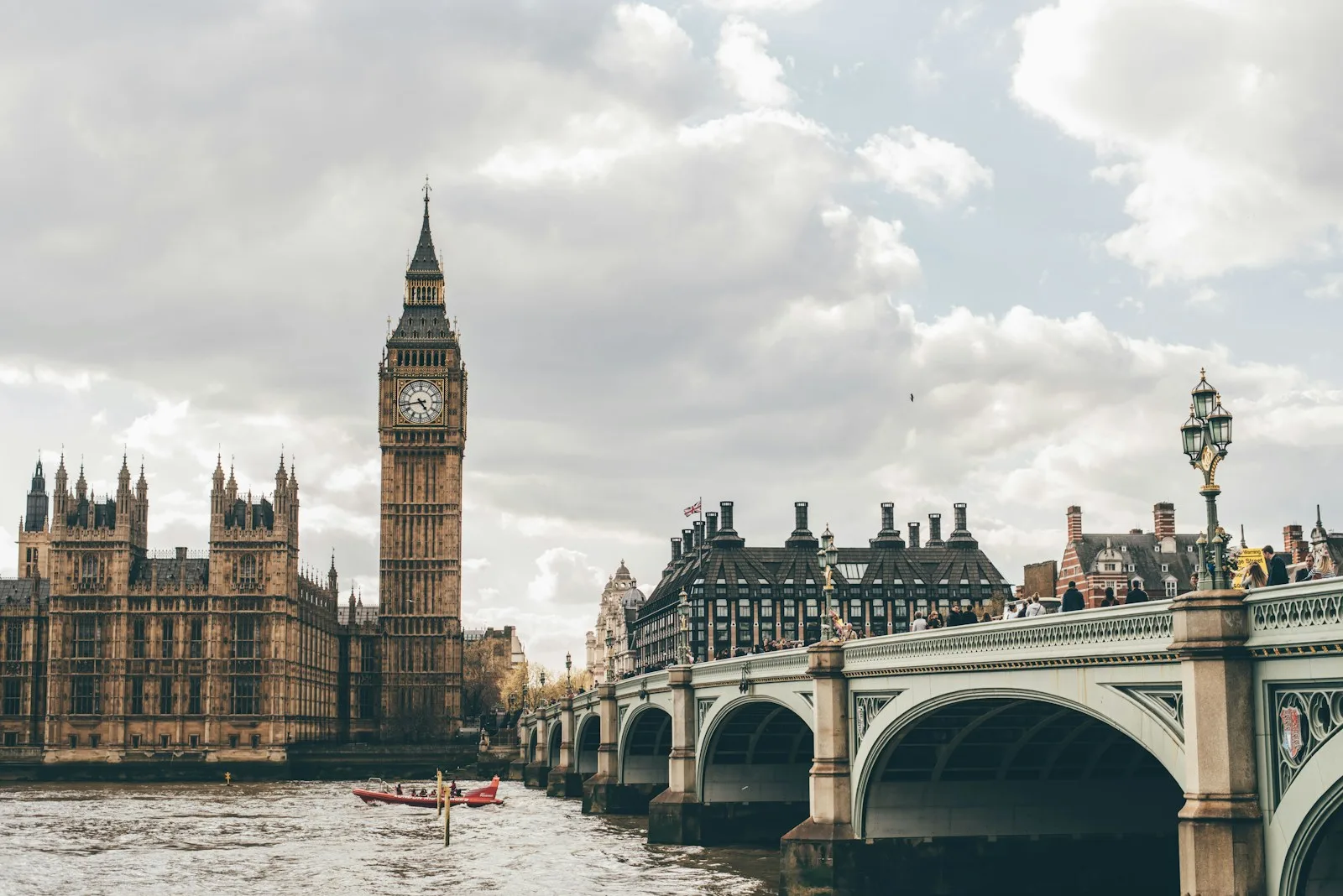
Most visitors see Westminster from the front: Big Ben, the Abbey, a photograph on the bridge. But the streets around Parliament hold centuries of quieter stories — the kind you only hear when someone points at an unremarkable doorway and tells you what happened behind it.
A palace older than Parliament
The Palace of Westminster was a royal residence long before it was a parliament. Edward the Confessor built here in the 1040s; Westminster Hall, raised in 1097, still stands with its great hammer-beam roof. Kings lay in state beneath it, and so did Winston Churchill and Queen Elizabeth II.
The abbey's forgotten corners
Beyond the coronation theatre of Westminster Abbey lie quieter spaces: the Chapter House where early parliaments met, the oldest door in Britain — made of oak around 1050 — and Poets' Corner, where Chaucer was buried simply because he lived nearby.
Streets that remember
Walk a few minutes from Parliament Square and the crowds vanish. Smith Square's baroque church was mocked as "Queen Anne's footstool". Lord North Street's Georgian terraces still carry wartime shelter signs painted on their brick. Cowley Street and Barton Street feel unchanged in a century — which is why they appear in so many films.
The river that made it all
Westminster exists because of a gravel island in the Thames — Thorney Island — firm enough to build an abbey on. The rivers that surrounded it now run underground, but their names survive in the streets above.
Join our Westminster & Royal London walking tour with a local guide.